About the 3rd Workshop on AI4SciSci About AI4SciSci
Over the past decade, the field of artificial intelligence (AI) has witnessed significant advancements across various domains, such as natural language processing and computer vision, which have further accelerated discoveries, innovations, and breakthroughs in many interdisciplinary fields — including Science of Science, which relies on big data to uncover reproducible patterns governing the evolution of research topics, collaboration networks, knowledge diffusion, and the systemic factors that drive scientific progress. Today, Science of Science is incorporating AI techniques into the analysis of big data, yielding deep and compelling insights into both longstanding and emerging problems in the field. Building on the success of the first and second AI4SciSci workshops, held in conjunction with ICDM’23 and JCDL’25, respectively, we propose the Third International Workshop on Artificial Intelligence for the Science of Science (AI4SciSci) to further engage the AI and Science of Science communities in promoting research and discussion on frontier topics in this area.
Call for Papers
We welcome papers on topics of interest that include, but are not limited to, the following.
-
Scholarly Graph Analytics
- Citation networks and their applications
- Social networks and their applications
- Knowledge graphs and their applications
-
Scholarly Data Mining
- Innovation/novelty detection and prediction
- Scholarly collaboration and mobility prediction
- Career trajectory modeling and analysis
- Numerical modeling of scientific development
- Causal inference and reasoning for SciSci
- Streaming data mining and its applications in SciSci
- Analysis of large bibliographic datasets
- Knowledge diffusion in scholarly networks
- Causal inference in scholarly big data
-
Scientific Document Processing and Understanding
- Scientific document parsing and its applications
- Scientific metadata extraction and its applications
- Scientific claim extraction and verification
- Scientific tabular data structure recognition and understanding
- Scientific figure and chart extraction and understanding
- Scientific document summarization and topic modeling
-
Computational Social Sciences
- Scientific reproducibility, replicability, repeatability, and generalizability
- Automation of scientific innovation using AI
- Societal benefits of AI in science and associated ethical implications
- Socioeconomic effects on scientific progress and innovation
- Scientific misinformation and disinformation
- Predictive modeling of scientific impact
- Scientific impact quantification using metrics beyond academia (e.g., patents, technology transfer, and industry revenue)
- Science policy and its implications for research
Originality
One unique feature of our workshop is that we will accept both original and published submissions. Authors of published works will need to submit an extended abstract (up to 2 pages) that explicitly cites the published work. In addition to summarizing the published work, the extended abstracts may also contain incremental updates or new results of the published work.
Double-Blind Review and Anonymity Guidelines
Ai4SciSci adopts the same double-blind review policy as JCDL. Submissions must not include any information that could identify the authors, such as names, institutional affiliations, acknowledgments, or references to prior work written in the first person. Authors should refer to their own prior work in the third person (e.g., “Prior work by Smith et al. (2020)” rather than “In our previous work…”). If authors share supplementary materials (e.g., code, data, models), these must be anonymized to avoid revealing author identities. Authors are encouraged to use anonymous hosting platforms such as anonymous.4open.science.
Submissions
All submissions must be written in English, following the CEUR workshop proceedings style.
Paper submission link: EasyChair
Submission Length
- Extended Abstracts (up to 2 pages)
- Short Papers (up to 4 pages)
- Full Papers (up to 8 pages)
** References and appendices are not counted towards the page limits.
All accepted papers that report original work will be published at the CEUR proceedings.
Important Dates
- Paper Submission Deadline:
September 7th, 2026Thursday, September 10th, 2026 - Author Notification:
September 21st, 2026Friday, October 02nd, 2026 - Camera-Ready Deadline:
October 5th, 2026Thursday, October 8th, 2026 - Workshop date: Tuesday, October 13th, 2026
Program
7600 John Q. Hammons Drive, Frisco, Texas 75034, USA
— Schedule —
| CDT (UTC−5) | EDT (New York) | Beijing (UTC+8) | Duration (minutes) | Type | PaperID.Title | Presenter |
|---|---|---|---|---|---|---|
| 9:00 AM | 10:00 AM | 10:00 PM | 15 | Opening | Opening remarks | Dr. Jian Wu |
| 9:15 AM | 10:15 AM | 10:15 PM | 75 | Keynote |
Science of Human–AI Coevolution
|
Dr. Yifan Qian |
| 10:30 AM | 11:30 AM | 11:30 PM | 30 | Break | Break | |
| 11:00 AM | 12:00 PM | 12:00 AM (+1 day) | 20 | Invited |
Journal AI policies and the disclosure gap in AI-assisted academic writing
|
Dr. Yi Bu |
| 11:20 AM | 12:20 PM | 12:20 AM (+1 day) | 25 | Long |
14. Foundation over Frontier: The Age of Science Cited by Patents after the Diffusion of Generative
AI
|
Saif Ali Alghamdi |
| 11:45 AM | 12:45 PM | 12:45 AM (+1 day) | 25 | Long |
19. Structure-Aware IMRaD Classification with Pretrained Language Models and Document-Layout Priors
|
Dongin Nam |
| 12:10 PM | 1:10 PM | 1:10 AM (+1 day) | 25 | Short |
21. Translational Sleepers in Computational Social Science: Understanding Academia-to-Industry
Translation
|
Jawwad Shadman Siddique |
| 12:35 PM | 1:35 PM | 1:35 AM (+1 day) | 55 | Break | Break | |
| 1:30 PM | 2:30 PM | 2:30 AM (+1 day) | 25 | Long |
22. FutureLens: Longitudinal Topic Patterns in Scholarly Text and Future-Work References
|
Ibrahim Al Azher |
| 1:55 PM | 2:55 PM | 2:55 AM (+1 day) | 25 | Long |
18. Extracting Quantum Hardware Benchmark Claims: A Document-Grounded Audit of Cross-Paper
Comparability
|
Harish Varma Siravuri |
| 2:20 PM | 3:20 PM | 3:20 AM (+1 day) | 25 | Long |
23. Cross-Paper Result Comparability: A Dataset, Protocol-Partitioned Leaderboards, and a Census
|
Harish Varma Siravuri |
| 2:45 PM | 3:45 PM | 3:45 AM (+1 day) | 45 | Break | Break | |
| 3:30 PM | 4:30 PM | 4:30 AM (+1 day) | 60 | Panel | Panel discussion (topic TBD) | Dr. Jian Wu (facilitator) |
| 4:30 PM | 5:30 PM | 5:30 AM (+1 day) | 15 | Closing | Closing note | Dr. Jian Wu |
CDT is UTC−5; EDT (New York) is UTC−4. Beijing times marked (+1 day) are on the following calendar day.
Keynote Speaker
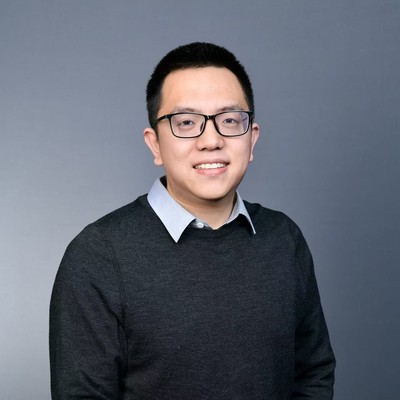
Title: Science of Human–AI Coevolution
Machines have always been integral to scientific discovery, extending human reach and augmenting human ingenuity. Yet these machines largely remained instruments: humans formulated the questions, interpreted the evidence, evaluated explanations, and organized the collective enterprise of science. Large language models and AI agents are beginning to alter this division of cognitive labor, as machines move from passive instruments toward increasingly active epistemic participants. At the same time, our understanding of science remains overwhelmingly a story about humans. The Science of Science asks how science advances. AI for Science asks what machines can discover. But what happens to science—and to scientists—when machines become part of the system that advances it?
In this talk I will draw on our recent work on research funding and university innovation to illustrate the emerging dynamics of human–AI coevolution in science and innovation. In the funding pipeline, we study 5,700 confidential proposal submissions and 131,000 publicly released awards from the US National Science Foundation (NSF) and National Institutes of Health (NIH) in 2021–2025. We find that LLM use has risen sharply since 2023; proposals with higher LLM involvement closely resemble recently funded work at both agencies and are more likely to be funded and to yield early-stage publications at NIH but not at NSF, providing large-scale evidence that the rise of LLMs is reshaping how scientific ideas are positioned, selected, and translated into publicly funded research. In university innovation, using data that combines 15 universities' confidential faculty rosters, invention disclosures, patents, and licenses, we develop AI models to predict commercialization potential. These models reveal a large reservoir of faculty with high but unrealized innovation potential, and a randomized field experiment, partnering with the Technology Transfer Office at a major research university, shows that directing low-cost outreach to these faculty leads them to file more new invention disclosures than controls. Beyond documenting how AI is changing the way ideas get written, selected, and translated, this line of work offers measures and interventions with direct policy implications for funders, universities, and the design of human–AI partnerships..
Program Committee


Dr. Sarah Rajtmajer
(Co-Chair)
Associate Professor
The Pennsylvania State University, USA
smr48@psu.edu