New The workshop proceedings are
online now !
About the 2nd Workshop on AI4SciSci About AI4SciSci
Over the past years, the field of artificial intelligence (AI) has witnessed significant advancements in various fields, which have further accelerated discoveries, innovations, and breakthroughs in many interdisciplinary fields, including the Science of Science, which relies on big data to unveil the reproducible patterns that govern individual scientific careers and the workings of science. Recently, the Science of Science has made promising progress by adopting AI techniques into big data, providing deep and interesting insights into new and long-standing Science of Science problems. Here, we present the second International Workshop on Artificial Intelligence for the Science of Science (AI4SciSci) to engage the AI and Science of Science communities in further promoting research and discussion on frontier topics in this field.
Call for Papers
This workshop is aimed at bringing together researchers from the areas of data mining (DM), artificial intelligence (AI), and Science of Science (SciSci). We expect to encourage an exchange of ideas and perceptions through the workshop, focusing on novel research directions, challenges, and techniques in the intersectional areas of AI and DM for SciSci. We welcome papers on topics of interest that include, but are not limited to:
-
Scholarly Graph Analytics
- Citation networks and their applications
- Social networks and their applications
- Knowledge graphs and their applications
-
Scholarly Data Mining
- Innovation/novelty detection and prediction
- Scholarly collaboration and mobility prediction
- Career trajectory modeling
- Numerical modeling of scientific development
- Causal inference and reasoning for SciSci
- Streaming data mining and applications for SciSci
-
Scientific Document Processing and Understanding
- Scientific document parsing and applications
- Scientific metadata extraction and applications
- Scientific claim extraction and verification
- Scientific tabular data structure recognition and understanding
- Scientific figure/chart extraction and understanding
- Scientific document summarization and topic modeling
-
Computational Social Sciences
- Scientific reproducibility, replicability, repeatability, and generalizability
- Innovation automation with AI
- Scientific goods for AI and ethical implications
- Socio-economic effects on scientific progress and innovation
- Scientific misinformation and disinformation
- Scientific impact quantification using metrics outside of academia (e.g., patents, technology transfer to industry and revenue)
Originality
The workshop welcomes original AND published work. The authors of published work are not obligated to rewrite it using the templates and there is not any page limit. However, only original works will be published.
Double-Blind Review and Anonymity Guidelines
Ai4SciSci adopts the same double-blind review policy as JCDL. Submissions must not include any information that could identify the authors, such as names, institutional affiliations, acknowledgments, or references to prior work written in the first person. Authors should refer to their own prior work in the third person (e.g., “Prior work by Smith et al. (2020)” rather than “In our previous work…”). If authors share supplementary materials (e.g., code, data, models), these must be anonymized to avoid revealing author identities. Authors are encouraged to use anonymous hosting platforms such as anonymous.4open.science.
Submissions
All submissions must be written in English, following the CEUR workshop proceedings style.
Paper submission link: EasyChair
Submission Length
- Extended Abstracts (up to 2 pages)
- Short Papers (up to 4 pages)
- Full Papers (up to 8 pages)
** References and appendices are not counted towards the page limits.
All accepted papers that report original work will be published at the EPiC series by easychair.
Important Dates
- Call for Papers: Friday, October 03rd, 2025
- Paper Submission Deadline:
October 24th, 2025Friday, November 07th, 2025 - Author Notification:
November 14th, 2025Friday, November 21st, 2025 - Camera-Ready Deadline:
November 28th, 2025Friday, December 07th, 2025 - Registration: Link
- Workshop date: Monday, December 15th, 2025
Program
Monday, December 15th, 2025 (EST, New York)| EST (New York) | MST (Boulder) | CET (Berlin) | Beijing (Dec. 16th) | Duration (minutes) | Type | PaperID.Title | Presenter |
|---|---|---|---|---|---|---|---|
| 11:00 AM | 9:00 AM | 5:00 PM | 12:00 AM | 15 | Opening | Opening remark | Workshop chairs |
| 11:15 AM | 9:15 AM | 5:15 PM | 12:15 AM | 60 | Keynote | Keynote speech
|
Dr. Daniel Acuña |
| 12:15 PM | 10:15 AM | 6:15 PM | 1:15 AM | 20 | Long | 8. Tracing Research Inequality in NLP: How Resource Disparities Shape Topic Trends and Diffusion
|
Lizhen Liang |
| 12:35 PM | 10:35 AM | 6:35 PM | 1:35 AM | 20 | Published | 10. Scientific productivity and practice in the era of Large Language Models
|
Keigo Kusumegi |
| 12:55 PM | 10:55 AM | 6:55 PM | 1:55 AM | 20 | Long | 1. Humans vs. LLMs on Open Domain Scientific Claim Verification: A Baseline Study
|
Benjamin Curtis |
| 1:15 PM | 11:15 AM | 7:15 PM | 2:15 AM | 15 | Short | 13. Quantifying Contextual Hallucinations in NLP Research Papers Before and After the LLM Era
|
Adiba Ibnat Hossain |
| Break | |||||||
| 4:00 PM | 2:00 PM | 10:00 PM | 5:00 AM | 20 | Short | 9. A Case For Clarity: Knowledge Engineering And Its Evolving Role In Medical Sciences
|
Henri Van Overmeire |
| 4:20 PM | 2:20 PM | 10:20 PM | 5:20 AM | 15 | Abstract | 5. Applying LLM to Library Metadata: Mapping Geography and Language in the Library of Congress Collection
|
Hongyu Zhou |
| 4:35 PM | 2:35 PM | 10:35 PM | 5:35 AM | 15 | Abstract | 3. Geography of Medical Knowledge: Scientific Focus, Disease Burden, and Research Response
|
Hongyu Zhou |
| 4:50 PM | 2:50 PM | 10:50 PM | 5:50 AM | 20 | Long | 7. A Gradio-Based Toolkit for Remote Sensing Data Fusion Literature
|
Jiaxin Du |
| 5:10 PM | 3:10 PM | 11:10 PM | 6:10 AM | 20 | Published | 4. Transforming Role Classification in Scientific Teams using LLMs
|
Wonduk Seo |
| 5:30 PM | 3:30 PM | 11:30 PM | 6:30 AM | 15 | Ending Remark | Workshop chairs | |
| 5:45 PM | 3:45 PM | 11:45 PM | 6:45 AM | Workshop Ends | |||
Keynote Speaker
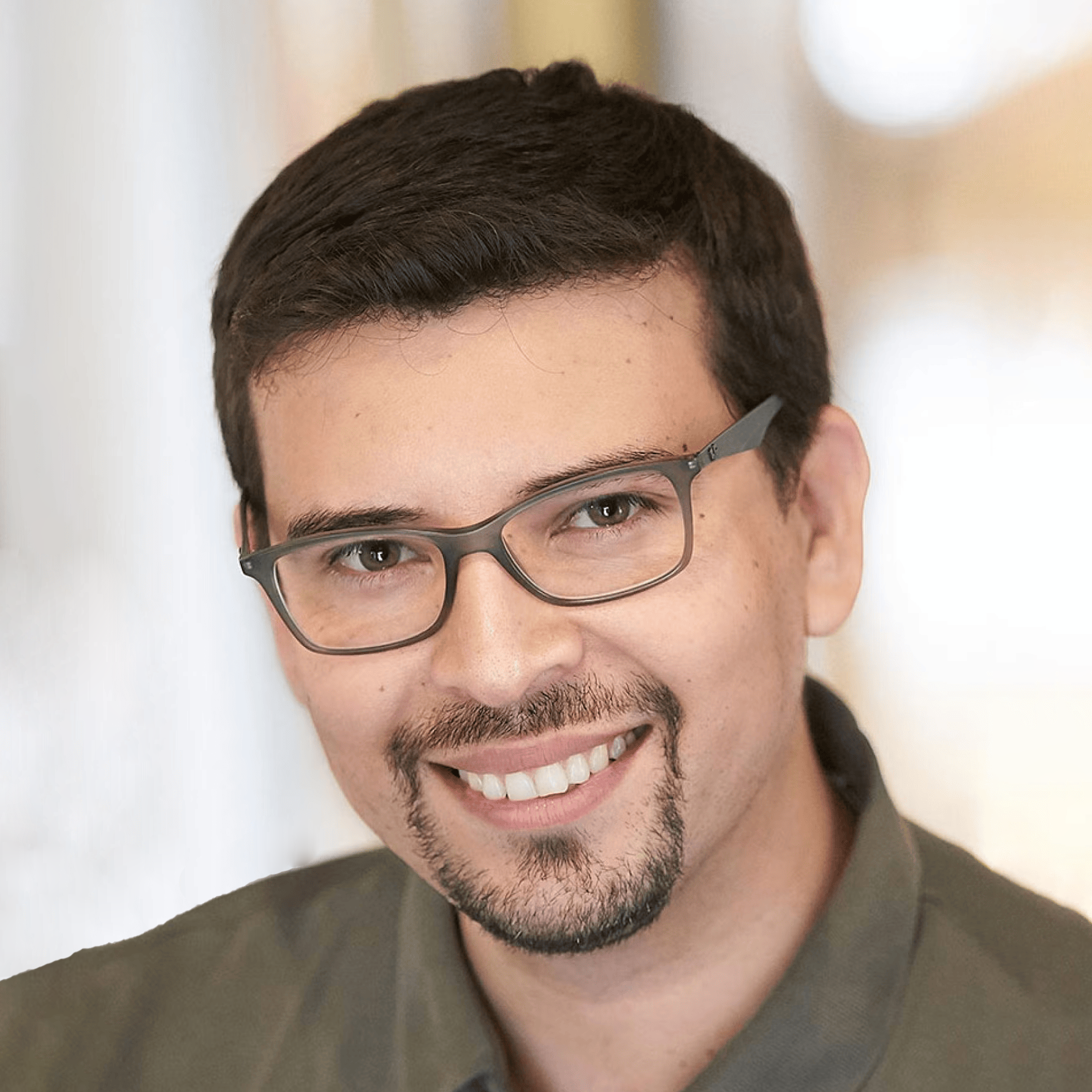
Title: Estimating the predictability of questionable open-access journals
Questionable journals threaten global research integrity, yet manual vetting can be slow and inflexible. Here, we explore the potential of artificial intelligence (AI) to systematically identify such venues by analyzing website design, content, and publication metadata. Evaluated against extensive human-annotated datasets, our method achieves practical accuracy and uncovers previously overlooked indicators of journal legitimacy. By adjusting the decision threshold, our method can prioritize either comprehensive screening or precise, low-noise identification. At a balanced threshold, we flag over 1000 suspect journals, which collectively publish hundreds of thousands of articles, receive millions of citations, acknowledge funding from major agencies, and attract authors from developing countries. Error analysis reveals challenges involving discontinued titles, book series misclassified as journals, and small society outlets with limited online presence, which are issues addressable with improved data quality. Our findings demonstrate AI’s potential for scalable integrity checks, while also highlighting the need to pair automated triage with expert review.
Program Committee


Dr. Sarah Rajtmajer
(Co-Chair)
Associate Professor
The Pennsylvania State University, USA
smr48@psu.edu